Beginner Guide to Prompt Engineering
A beginner-friendly explanation of prompt engineering basics, prompt structure, and how to get better results without overcomplicating the process.
Prompt engineering is mostly about clarity
Beginners often think prompt engineering is a technical trick. In practice, it is usually just the skill of describing the task clearly enough that the model can help without being rescued every sentence.
That makes the work approachable. You do not need complicated syntax. You need repeatable habits: define the task, specify the audience, and tell the model what a good answer should look like.
Prompt examples with visuals
These prompt pages include the actual prompt image and copy actions, so readers can move from the guide into the live prompt immediately.
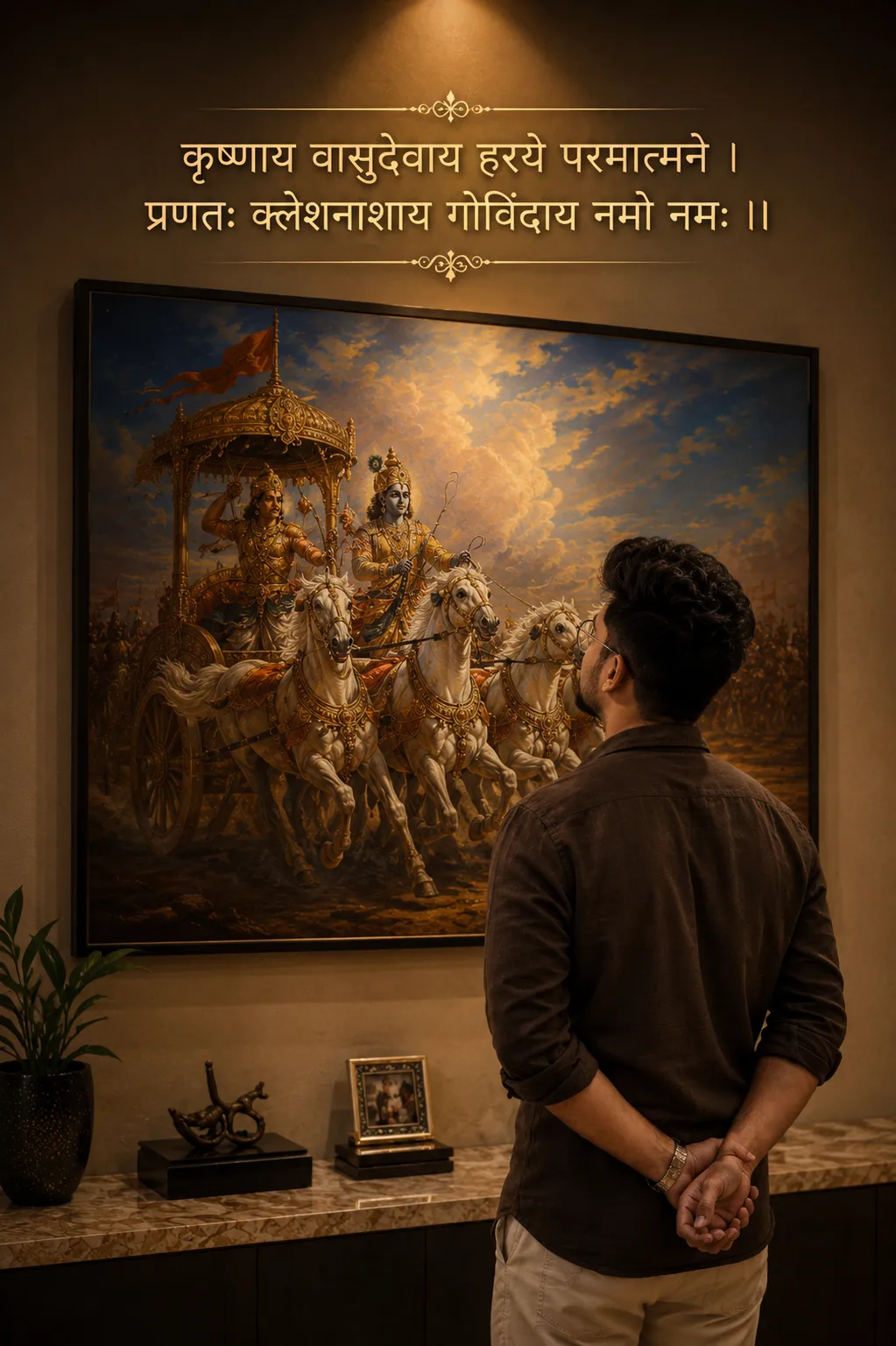
> Transform the uploaded reference person into an ultra-realistic cinematic Bhagavad Gita inspired scene while preserving ONLY the exact facial identity, hairstyle, beard details, skin tone, and natural human realism from the uploaded reference image. IMPORTANT CAMERA ANGLE: the image should feel naturally clicked slightly from the left-back side perspective, not perfectly centered. The camera must capture both the person and the Mahabharata painting clearly in the frame exactly like a casual cinematic candid photo. The person should stand calmly facing the painting with both hands folded behind the back, giving a mature, leadership, wise, emotionally powerful, and self-controlled aura. The head should be slightly raised upward as if deeply thinking and absorbing the wisdom of Bhagavad Gita. Only a subtle portion of the side jawline and hairstyle should be visible naturally from the left-back angle — not a full side face. Outfit should be a realistic premium dark earthy-brown cotton shirt with soft rolled sleeves, natural wrinkles, realistic texture, and masculine minimal Indian aesthetic exactly like a stylish everyday luxury look. Environment should look like a realistic modern Indian luxury room or elegant home interior with soft cream/beige walls and warm cinematic indoor lighting. The Mahabharata painting should be colorful, rich, vibrant, and highly detailed — Lord Krishna driving the divine chariot with Arjuna, white horses in motion, dramatic clouds, spiritual battlefield atmosphere, golden-orange tones, rich blue sky, premium mythological realism. The painting should remain fully visible while the person occupies the lower-right or center-right foreground naturally, creating balanced cinematic composition. Add elegant Sanskrit devotional typography on the wall or softly glowing near the lower portion of the frame in a premium cinematic style with realistic golden text effect: “कृष्णाय वासुदेवाय हरये परमात्मने । प्रणतः क्लेशनाशाय गोविंदाय नमो नमः ।।” The Sanskrit text should feel naturally integrated into the scene — subtle, luxurious, spiritual, and aesthetically balanced. Use refined golden typography with soft glow, premium spacing, and cinematic devotional styling. Lighting style: realistic warm room lighting with subtle top glow above the artwork, natural indoor shadows, soft highlights on hair and shoulders, realistic depth and cinematic warmth. The overall image must look like a real DSLR or iPhone portrait photograph captured naturally inside a luxury modern home — absolutely NO anime look, NO AI-art appearance, NO illustration style. Ultra-photorealistic cinematic photography, authentic skin texture, realistic brown shirt fabric, natural hair details, cinematic color grading, subtle depth of field, premium Instagram aesthetic, emotionally powerful masculine leadership vibe. No watermark, no UI elements. Vertical 9:16 composition.
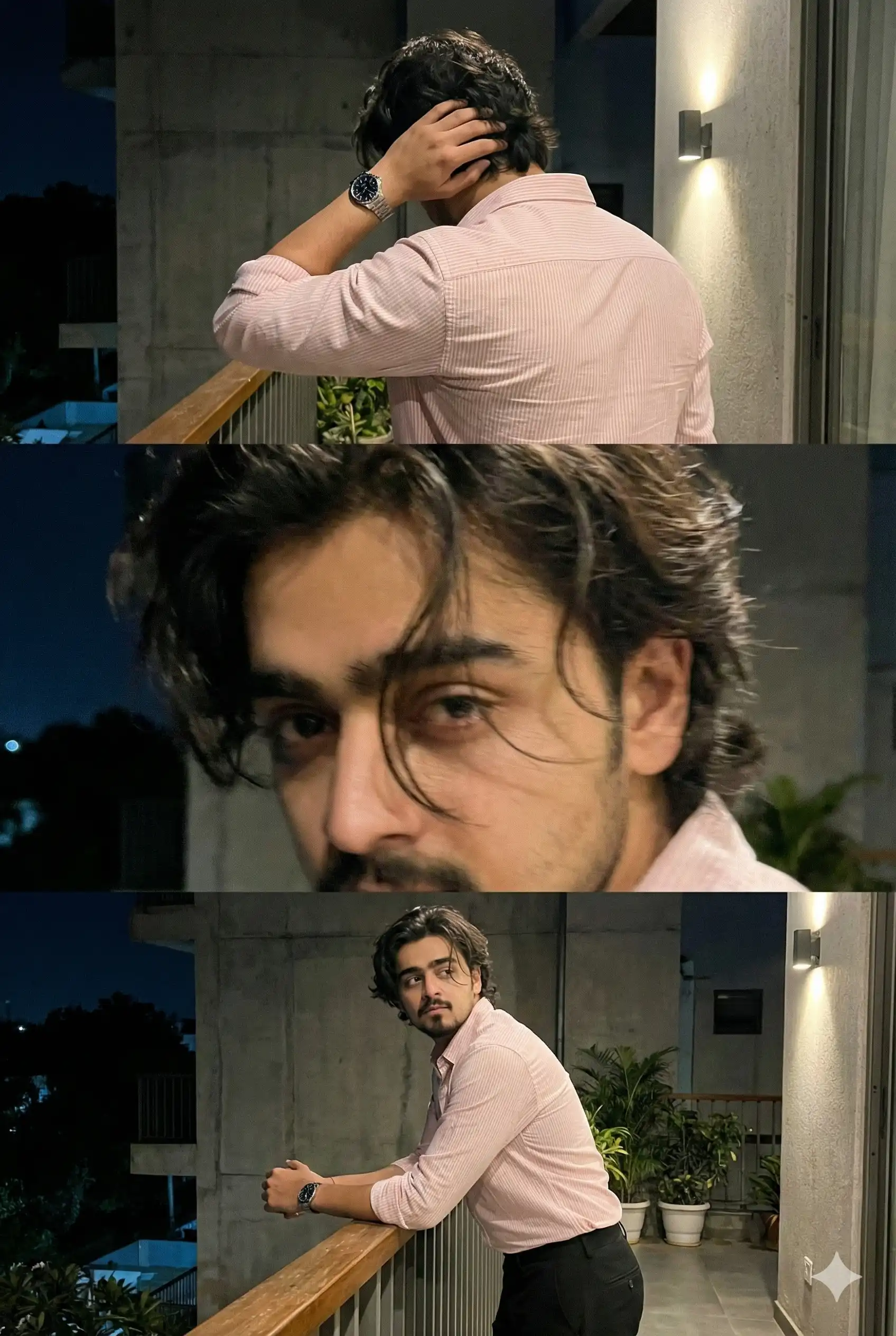
Use the uploaded reference photo as the single and exclusive facial identity source. The same exact face must appear in ALL three frames with no variation. Do not reinterpret, regenerate, beautify, or modify the face between frames. Facial identity has highest priority over lighting, angle, blur, or realism. Ultra-realistic vertical image split equally into three stacked frames (top/middle / bottom) within one single photo. All frames show the same person with the same face, same outfit, same location, captured seconds apart like a burst of candid smartphone shots. Only subtle movement changes. Feels accidental, real, and human. Location & background: A small outdoor balcony or corridor beside a modern building at night. Wooden hand railing, concrete wall on one side, lush green plants and small trees behind. Warm wall-mounted lights glowing softly. Dark night sky visible. Urban, café-like residential atmosphere. Real, lived-in environment- not staged. Outfit (locked): Light pink vertically striped button-down shirt, top buttons open showing slight chest. Full sleeves rolled to forearms. High-waisted black tailored trousers. Metal wristwatch on one wrist. No jacket, no accessories beyond the watch. Hair & face (LOCKED): Medium-length, thick, naturally wavy hair. Slightly messy, lived-in texture. Light stubble / short beard. Real skin texture, visible pores. No smoothing, no beautification. FRAME BREAKDOWN (VERY IMPORTANT) TOP FRAME - BACK SHOT Back view of the subject. He is touching the back of his hair near the neck, fingers slightly tangled in hair. Head tilted slightly down and to the side. Relaxed posture, candid movement. Hair texture clearly visible from behind. MIDDLE FRAME - CLOSE-UP Tight close-up near the eyes and upper face. Messy strands of hair falling naturally near the eyes. Eyes partially visible, soft focus. Very slight motion softness from movement. Feels intimate, accidental, not posed. BOTTOM FRAME - MID SHOT Mid-shot from waist or chest up. Subject leaning casually against the railing. Looking sideways, not at the camera. Expression calm, confident, contemplative. Natural posture, effortless presence. Lighting (LOCKED): Warm artificial wall lighting mixed with cool night ambient light. Soft illumination on face and shirt. Background slightly darker. No flash. No dramatic contrast. Camera Feel (LOCKED): Handheld smartphone photo. No portrait mode. No background blur. Slight shake, mild softness. Natural low-light noise. Imperfect framing. Overall Mood: Effortless elegance. Quiet confidence. Modern masculine. Looks like three moments caught naturally within seconds, not a styled shoot. Feels real, human, Pinterest-worthy, and believable. Negative Prompt: studio lighting, cinematic grading, flash, portrait blur, beauty filter, smooth skin, over-sharp, CGI, Al look, fake background, posed fashion shoot. Keep the face 100% unchanged.
A practical starter structure
A beginner prompt can be built with five pieces: role, task, context, constraints, and format. That pattern works across writing, research, planning, and creative generation.
The more you use it, the easier it becomes to notice weak spots in a prompt. If the output is vague, the missing piece is usually context or format.
How to learn faster
The fastest way to improve is to compare results. Change one prompt variable at a time and look at how the output changes. That gives you real feedback instead of guesswork.
This is also why a clean content platform matters. If the page has examples, FAQs, and related guides, the reader has a path forward instead of landing on an empty page.
Related prompts
Frequently asked questions
Is prompt engineering hard for beginners?
No. It becomes much easier once you focus on clarity instead of trying to memorize advanced tricks.
Should beginners copy prompt templates exactly?
Templates are a starting point. The best results come when you adapt them to your task and audience.
Related blog posts
How to Write Better AI Prompts
A plain-English framework for writing prompts that are clearer, more reusable, and easier for AI models to follow.
Top Productivity Prompts
A collection of prompt ideas for planning, focus, task breakdowns, and clearer decision-making in day-to-day workflows.